Insulin
Promise at DawnInsulin is both a daily necessity in the narrator’s mother’s life and a recurring measure of her son’s fear of losing her. Its presence moves from a secret she manages alone to a supply he tries to secure across wartime borders, making the medicine a concrete link between maternal care, separation, and survival.
A concealed daily treatment
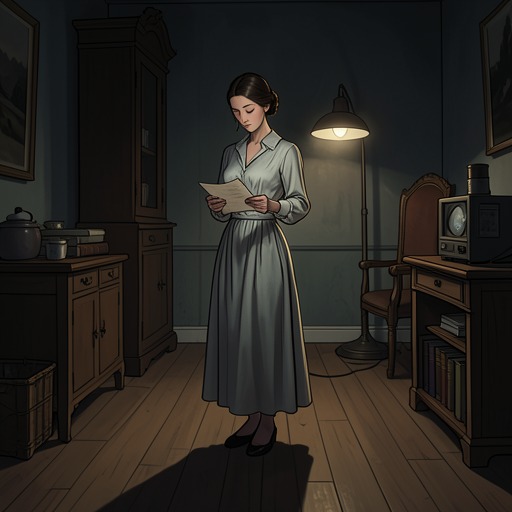
For years, the narrator’s mother concealed that she had diabetes. Each morning before beginning her work, she gave herself an insulin injection, then carried on with the demands of running the Hôtel-Pension Mermonts. The illness came to light when, after repeatedly climbing the stairs between the restaurant and kitchens, she collapsed in a chair. Her gray face, trembling, and hand pressed to her chest brought a doctor quickly to the hotel; the diagnosis was hypoglycemia caused by an insulin injection that had been too strong.
The discovery changed the meaning of her routine. The narrator had seen her manage the hotel’s many tasks, but had not known that she began each day with an injection or that diabetes was part of the effort she kept from him. The episode leaves him terrified by her apparent vulnerability and by the possibility that she might die before he had fulfilled what she expected of him.
Medicine, risk, and maternal plans
The insulin episode belongs to a wider pattern in which the mother controls what her son knows about her health. Later, while they played cards, she told him that the doctors no longer forbade her to smoke. He understood that she was scheming, though he did not guess what she had in mind. The doctor reassured him that she might continue for several years; the exchange did not, however, remove the threat represented by her diabetes or the need for continued treatment.
Insulin also appears against the background of the narrator’s own grave illnesses, but the two medical stories are distinct. His scarlet fever and acute kidney inflammation brought him close to death, and his mother refused an operation on his kidney. Insulin, by contrast, is specifically tied to her diabetes and to the daily treatment she administered herself. The difference sharpens the family’s mutual dependence: while he fears leaving her unsupported, her concealed illness makes her own continued care a concern he has only belatedly recognized.
Wartime supply and separation
When the narrator considered escaping from Meknès, the question of insulin entered his calculations alongside the danger of flight. As he approached a Simoun aircraft he thought about whether defeat and occupation might leave France short of the medicine. He believed his mother could not last three days without her injections and wondered whether the Red Cross in London might arrange regular deliveries through Switzerland. The thought turns an abstract escape plan into a problem of continuity: leaving could help him continue the fight, but his mother’s treatment could not simply be left to chance.
Before they separated, he told her that he had arranged for the best insulin to be sent from Switzerland, thanks to a promise made by Mary Boyd, a woman on the ship. The narrator later confirms that the promise was kept: for several years, until a year after the war, insulin continued to reach the Hôtel-Pension Mermonts from Switzerland. He never found Mary Boyd again, though he hoped she was well and would read his account. The medicine’s journey thus records the practical afterlife of a brief act of assistance, sustained across years and distance.
Narrative significance
Insulin is not merely a clinical detail in the narrator’s account. The collapse exposes a long-hidden fact about his mother’s health; the contemplated shortage gives his departure a domestic cost; and the successful deliveries show that concern for her survival could be turned into an ongoing arrangement. The medicine makes their bond material without making it simple: she had hidden her condition from him, while he tried to secure the treatment on which her daily life depended. Its recurring presence gives the story’s language of attachment a practical counterpart in a medicine that had to be supplied, carried, and delivered.